Shop
Shop the exact gaps left in the week.
Check off meal-based grocery items, add store extras, and rebuild the list when the plan changes.
Review weekly planShop
Checklist
Groups
Aisle-ready
Progress
Saved
Loading saved Forkue plan...
A clearer way to shop
Organize
Grouped by category
Keep produce, pantry, dairy, protein, frozen, and household items grouped for faster store trips.
Plan
Based on selected meals
Build lists from the meals you actually picked, reducing duplicate buys and forgotten dinner ingredients.
Check
Pantry vs fresh items
Separate shelf-stable staples from fresh ingredients so you can check the pantry before buying more.
Match
Small gaps from missing ingredients
See the short list of ingredients that would unlock a recipe instead of starting the list from scratch.
Two grocery-list examples from current recipe data
Forkue's list logic starts with selected meals, removes what you already have, then groups the remaining gaps for shopping.
Example list
From chicken rice broccoli bowls
A simple bowl dinner with tender chicken, rice, broccoli, and a soy-garlic finish.
Example list
From tuna pasta skillet
A pantry pasta with tuna, tomato sauce, peas, and parmesan.
Pantry check before the grocery run
The most useful list is usually the shortest list that completes the meals you chose.
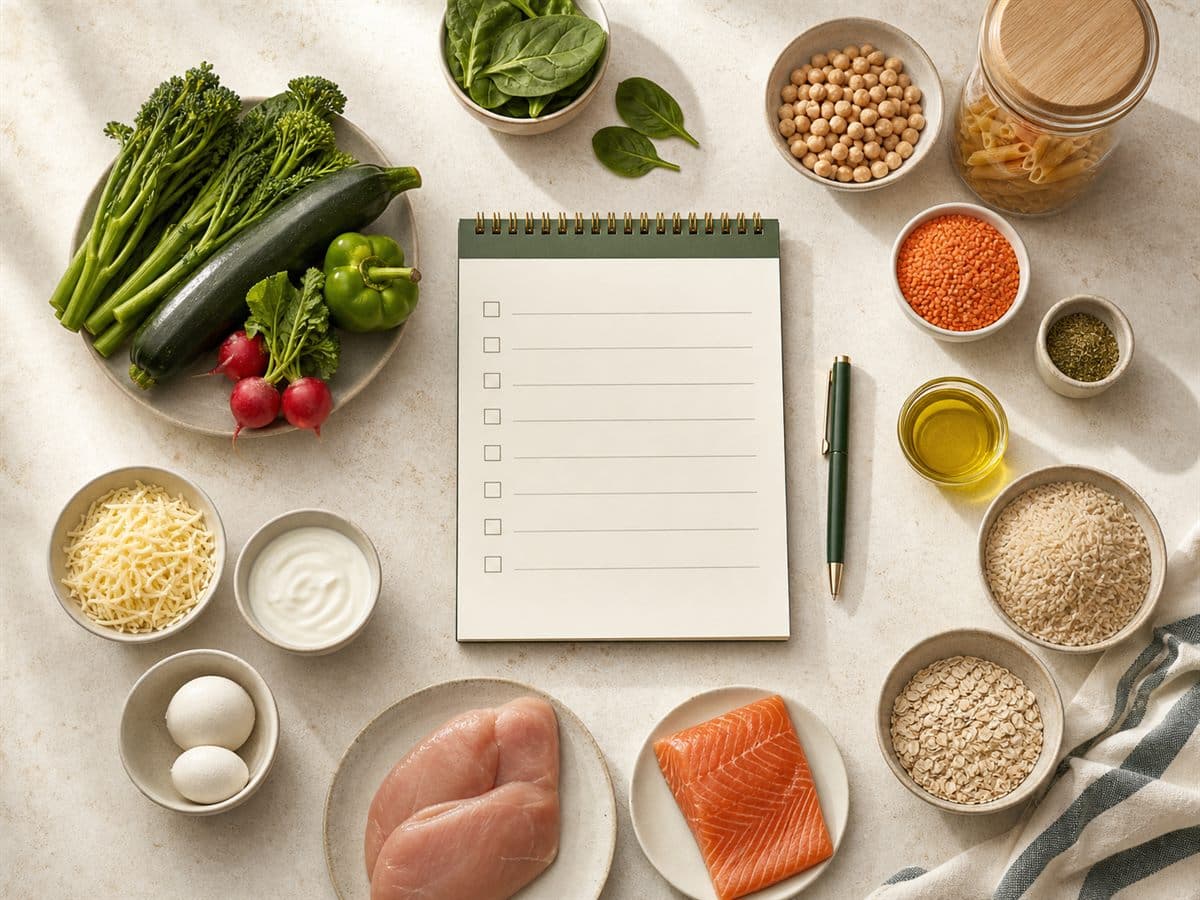
Check these before buying again
- Rice, pasta, tortillas, oats, and other repeat grains
- Canned tuna, beans, lentils, canned tomatoes, tomato sauce
- Olive oil, soy sauce, salt, pepper, garlic, and spices
- Frozen vegetables that can replace or support fresh produce
From pantry check to checkout
A good grocery list starts with the ingredients you have, the meals you want, and the smallest useful set of missing items.
Step 1
Check ingredients
Start with pantry, fridge, and freezer staples.
Step 2
Choose meals
Pick realistic meals that share useful ingredients.
Step 3
Shop the gaps
Buy only what completes the plan.